What Can You Call Art Wth Lines and Colours
What is Line in Terms of Fine art?
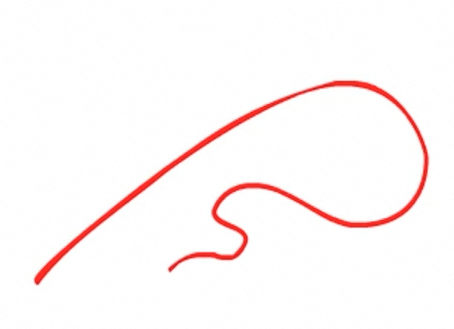
Line is one of the seven elements of fine art. It is considered past many to be the most basic element of art. In terms of art, line is considered "a moving dot".
A simple way of thinking of a line is to imagine a point that moves...
Drawing and Painting with Line
Line has an endless number of uses in the creation of both drawings and paintings. Although nosotros typically associate line with cartoon, information technology's also foundational to painting.
Profile Lines
Maybe the well-nigh obvious use of line is when it is used to ascertain the edges or boundaries of a subject. We can evidently communicate a discipline'south edges by using line. In almost cases, when we begin a drawing, we kickoff by drawing the outlines of the field of study.
The outlines are just the beginning since line is besides used to describe the details on the subject every bit well. Usually, nosotros can simplify areas of contrast on a subject into a line.

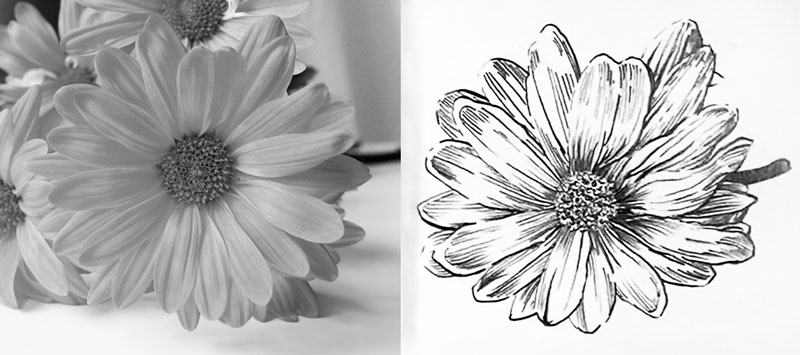
In the image below, we tin can see the photo reference next to the resulting line cartoon of a flower. The flower is communicated clearly in the line cartoon. However, you'll annotation that the drawing is not an exact replica of the reference. At that place are only lines used in the cartoon, withal there are many more complexities present in the photo.
The drawing above is office of "Drawing Bootcamp". Click here to view Drawing Bootcamp (Membership required).
Every bit we tin can see, line is great for describing a field of study in a cartoon, only outlines on their own are not complete. Other elements of art (specifically value) must exist used in addition to line to create a realistic cartoon.
Lines that are used to communicate the edges and/or to draw the details of a subject (like nosotros encounter above) are called contour lines. We commonly call these lines outlines.
Line Quality
Line quality refers to the characteristics of the line drawn. In many cases, line quality refers to the thickness of a line. By varying the line quality (including both thick and sparse lines), we create drawings that are more interesting and provide more information to the viewer.
Take a await at the line drawing of the apple beneath. Notice how the contour lines are thicker in areas. A thicker line is used where we expect to see shadow and where the apple itself is a little thicker.

In this way, we can communicate a bit about the form of the apple tree and the light using a unproblematic line.
Cross Contour Lines
Cantankerous contour lines are more complex than profile lines. Cross contour lines flow over the class of the subject. These lines tin can be implied or visible. Cross contour lines are mostly used when line is used to shade a drawing with hatching and cross hatching.
To meliorate understand cross profile lines, you may imagine running your finger over the surface of an apple. Offset from the stalk and move down to the bottom. Equally you move your finger, imagine leaving a line behind. If you proceed repeating this, making "lines" with your finger all effectually the apple, you would take created cross contour lines.
Nosotros can see this illustrated in the image below...

The importance of understanding the concept of cross contour lines lies in shading (or calculation shadow and highlight) with line. Depending on the form of the object you lot are drawing, these lines may curve or change direction.
For more than on cross profile lines, see the following lessons...
- Cantankerous Contour Lines - 25 Days to Better Drawings (Membership required)
- Line and Value - The Pen and Ink Experience (Membership required)
- How to Employ Cross Contour Lines to Create the Illusion of Grade
Shading with Line
Line can be used to shade drawings as well. Shading is the process of developing the value (fine art element). Value is the darkness or lightness of a color. Darker values typically stand for shadows while lighter values typically correspond highlights or lighter tones.
Lines can be full-bodied to create darker values. The more lines that are used, the darker the perceived value. Lighter tones can be achieved by assuasive more than of the white of the paper to show through or with less concentrated lines.
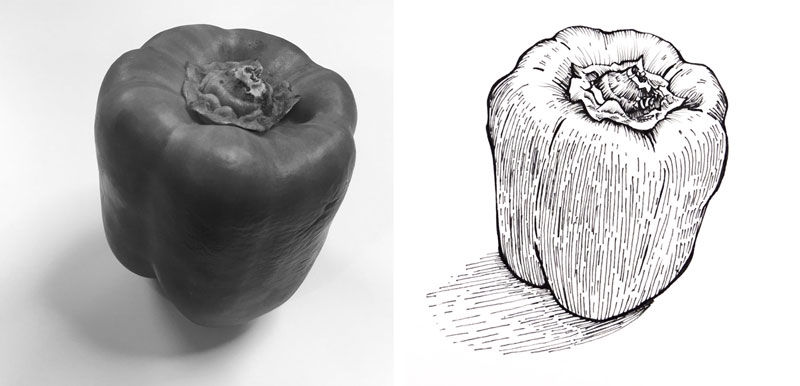
We tin can see this concept illustrated in the prototype below. The pepper has been shaded using lines. In areas where the value is darker, more lines are used. In areas where the value is lighter, less lines are used. You'll as well notice that line quality (diversity in line thickness) is likewise used to create a more interesting cartoon.
The cartoon above is part of "25 Days to Better Drawings". Click here to view 25 Days to Better Drawings (Membership required).
You lot'll also observe that the lines used to shade the cartoon curve and change management slightly based on the form of the pepper. This illustrates the concept of cross contour lines discussed before.
Hatching
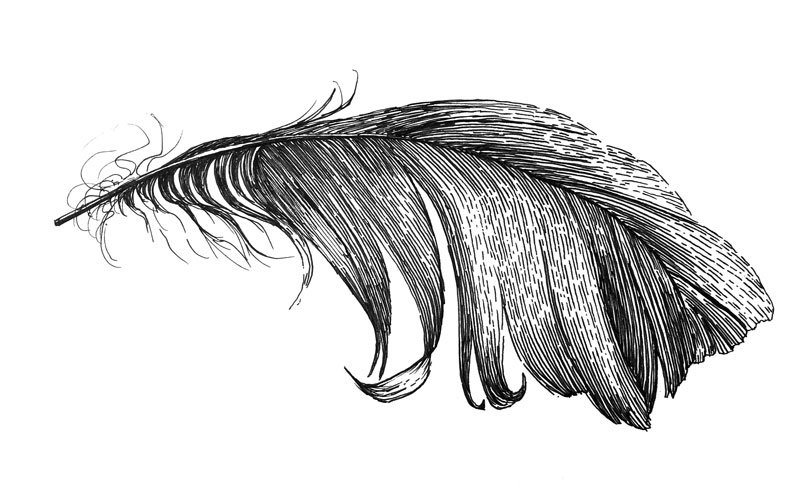
Hatching is the process of using directional linear strokes that do not cross over each other to develop the shading in a cartoon.
Hatching tin can be used with whatever drawing or painting medium just it is at its best when used with linear drawing medium. Beneath we can see a cartoon that was created with pen and ink that utilizes hatching.
The drawing above is function of "Subjects with Pen and Ink". Click here to view Subjects with Pen and Ink (Membership required).
Cross Hatching
Cross hatching is the process of developing the value (or shading) in a cartoon or painting using lines that cross over each other. Just like with hatching, the greater the concentration of marks, the darker the value. Hatching and cross hatching are oftentimes used together.
Below, you'll discover a drawing created with pen and ink that utilizes cross hatching.
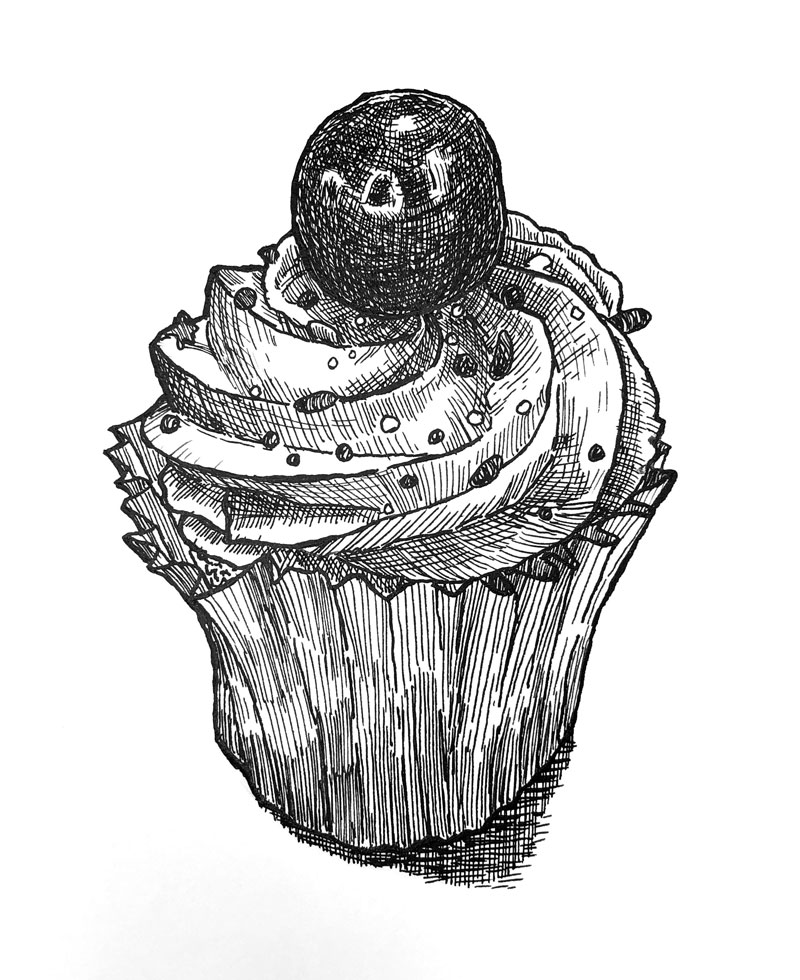
The drawing above is part of "Subjects with Pen and Ink". Click here to view Subjects with Pen and Ink (Membership required).
Types of Lines
Lines come in all shapes and sizes and the types of line that tin can be drawn are endless. Some common forms of line include horizontal, vertical, diagonal, zigzag, and curved. Other types of line include broken lines and implied lines.
Horizontal lines are lines that are parallel to the horizon and by and large menstruum from left to right or vice versa.

Vertical lines are lines that move upwardly and down without any slant.

Diagonal lines are lines that slant.

Zig zag lines are lines that change direction abruptly.

Curved lines gradually change direction.

Cleaved lines include open up spaces simply keep on a path. These lines may imply an edge or be used to communicate a highlight.

Implied lines may include the open space in betwixt broken lines. These lines may not be visible but are implied due to contrast in value or the inclusion of broken lines.
Run into likewise: Implied and Cleaved Lines
Line - Vocabulary Terms
Line - element of art. In terms of art, line can be described as a moving dot. Line is perchance the near basic chemical element of drawing.
Line Variation - the use of a multifariousness of line including width, length, texture, thickness, etc. to add together involvement to a drawing or painting.
Length - lines tin can be long or short.
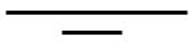
Width - lines can be wide or skinny.
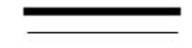
Texture - lines can exist rough or smooth.
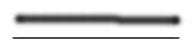
Direction - lines tin motion in any direction.
Degree of curve - lines can bend gradually or not at all.
Hatching - lines that flow in the same direction in lodge to develop value or shading
Line quality or line weight - refers to the thickness or thinness of a line. By varying the line quality artists can make objects announced more 3-dimensional and more interesting.
Crosshatching - lines that cantankerous over each other in guild to develop value or shading.
earnestcorties1937.blogspot.com
Source: https://thevirtualinstructor.com/line.html
0 Response to "What Can You Call Art Wth Lines and Colours"
Post a Comment